
Academic / Community Design
Bush to Bowl Precinct
A community-focused design proposal exploring Indigenous food systems, education and cultural connection through shared spaces, landscape and learning.
Location
NSW
Year
2025
Status
Academic Project
SDS Role
Academic Concept Design, Masterplanning & Visualisation
Bush to Bowl Precinct explores how design can support cultural connection, education and community engagement through integrated learning, hospitality and agricultural spaces. The proposal creates a place where knowledge sharing, food systems and collective experiences are brought together.
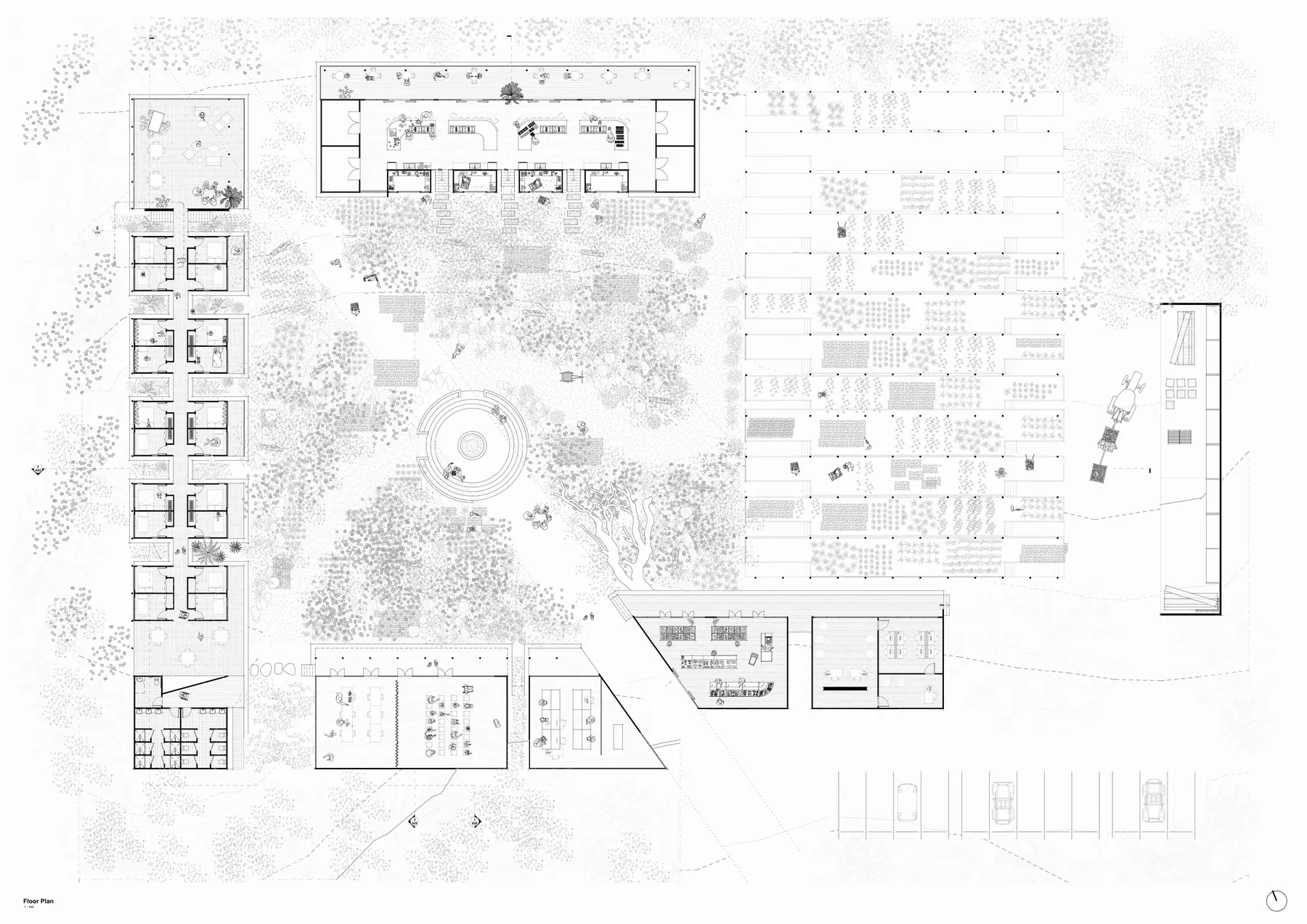
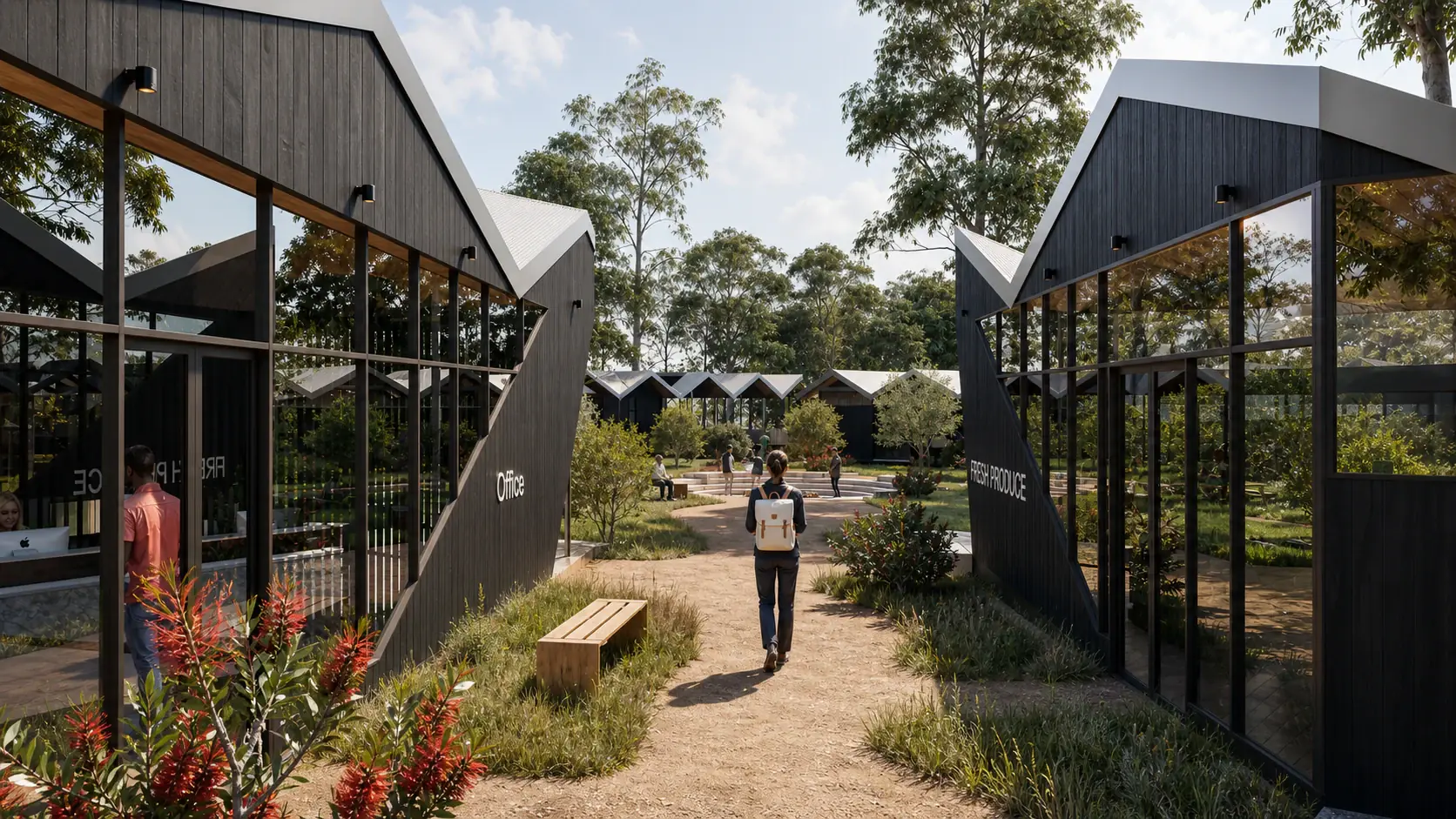
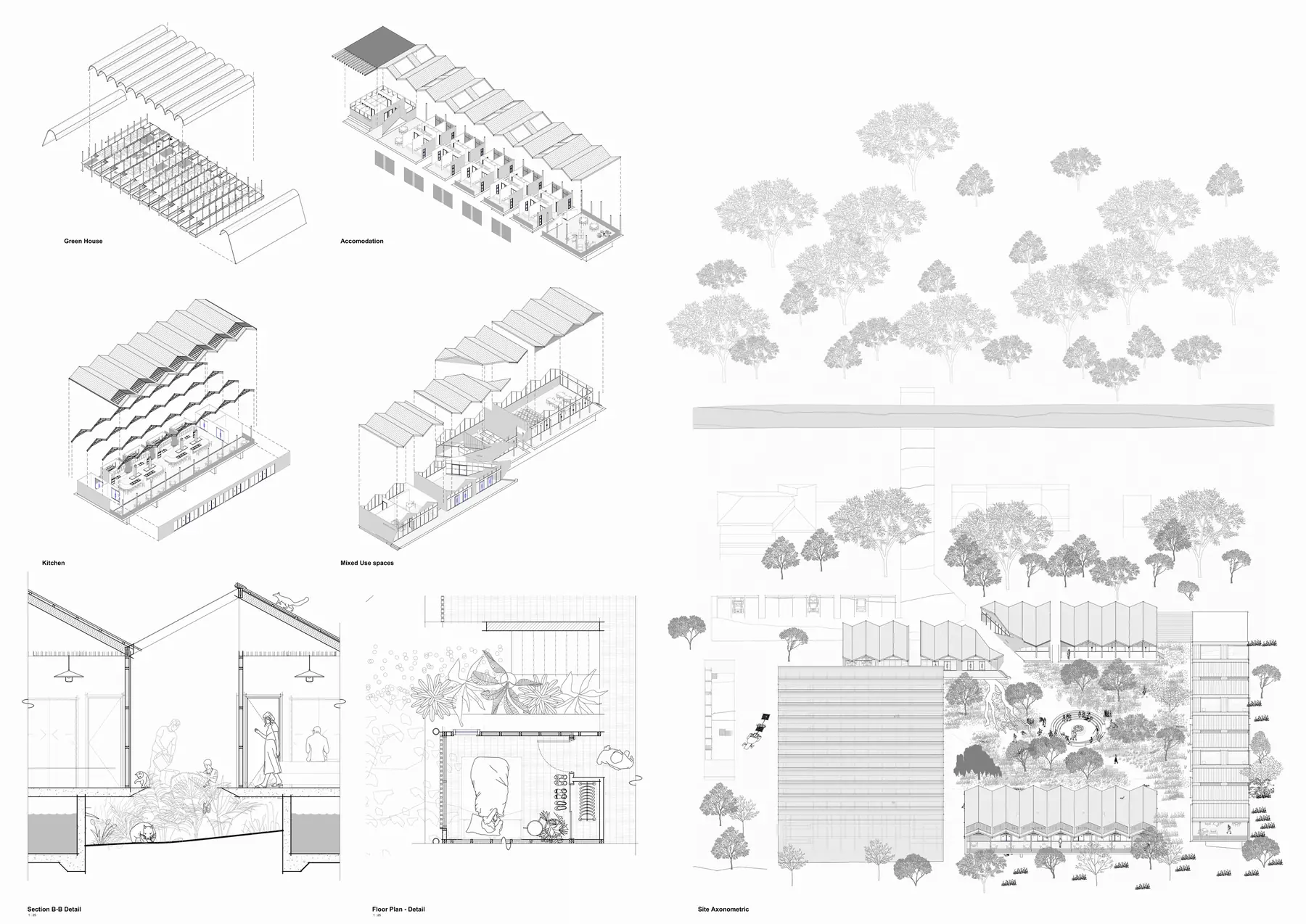
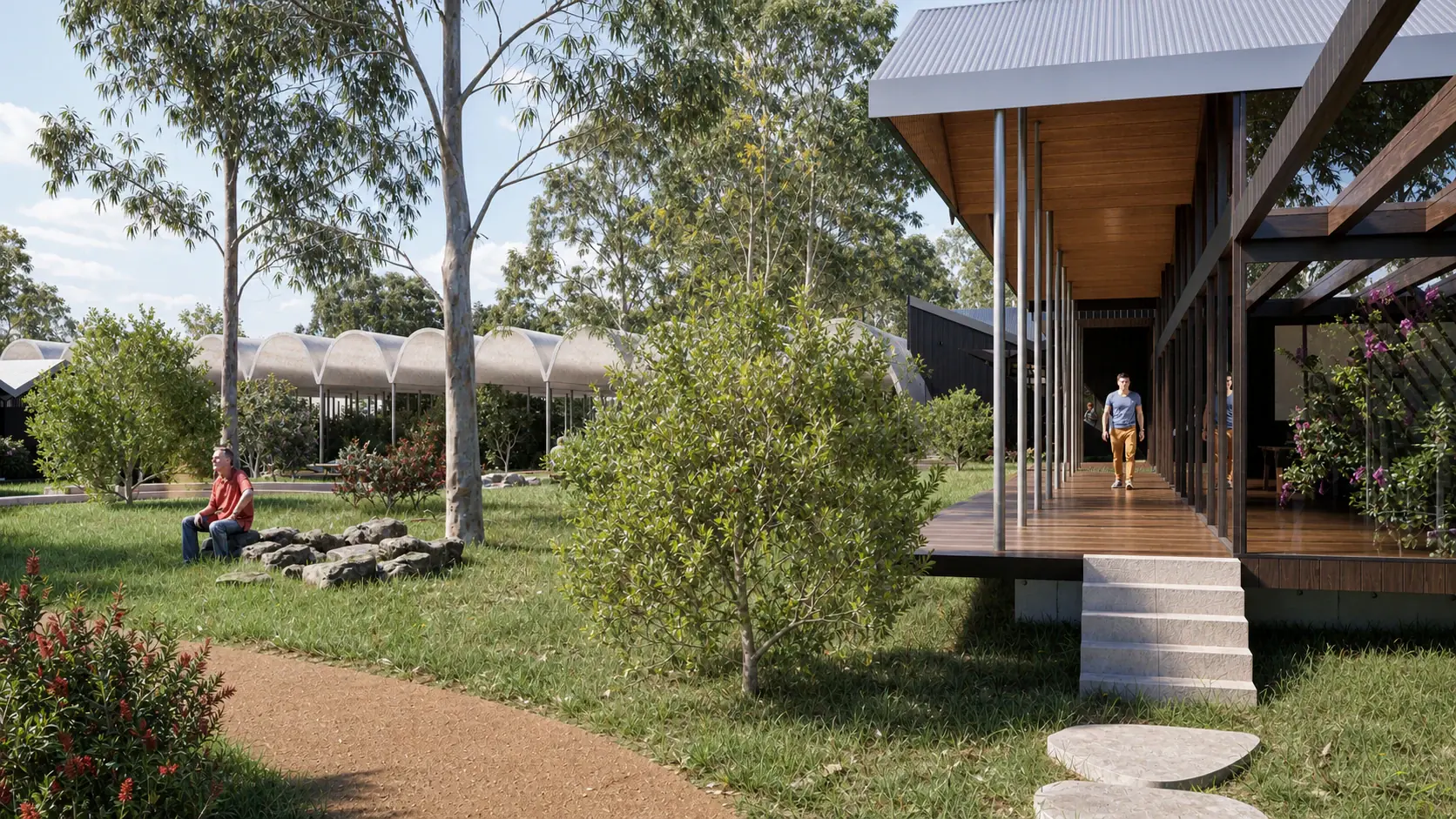
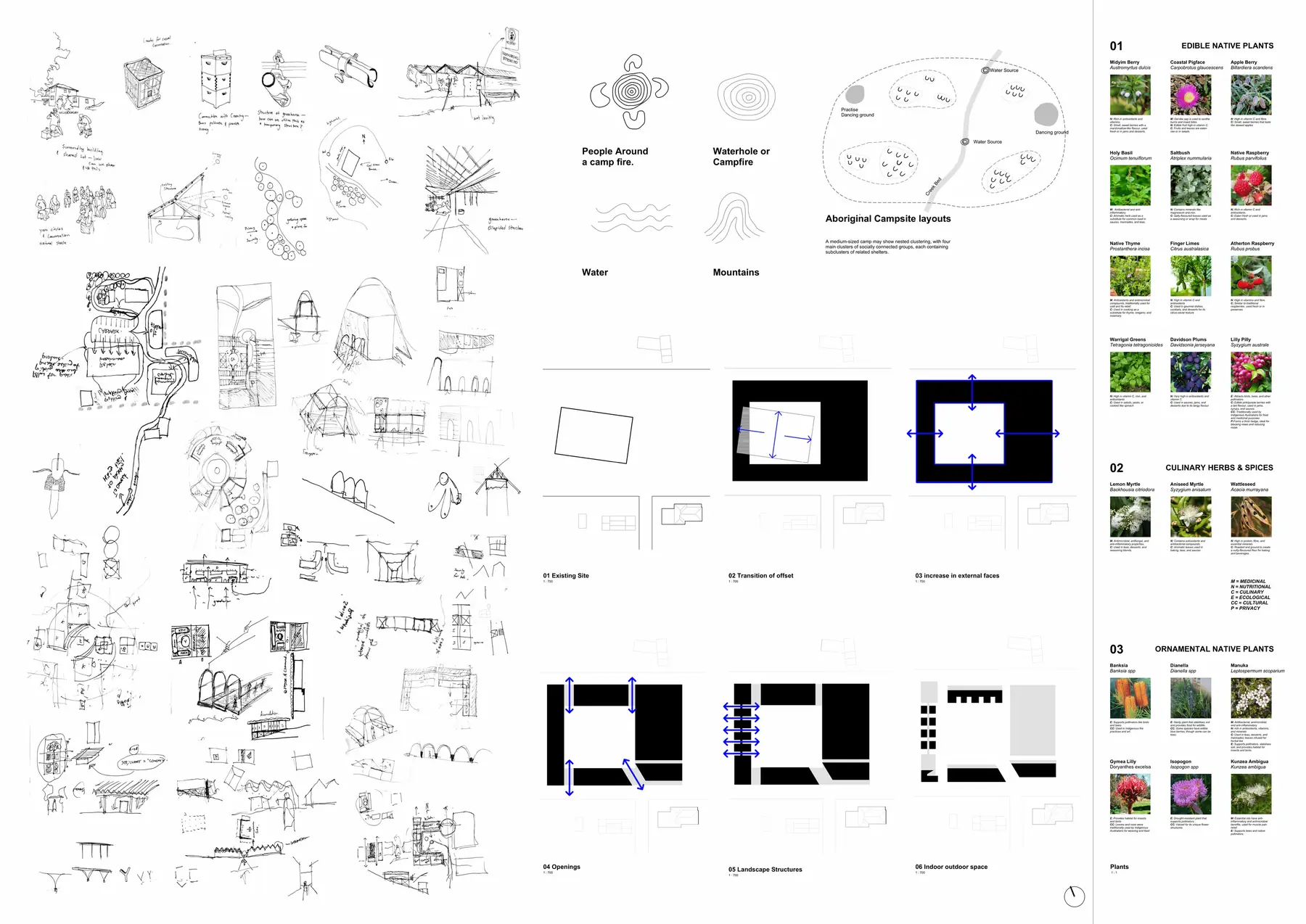
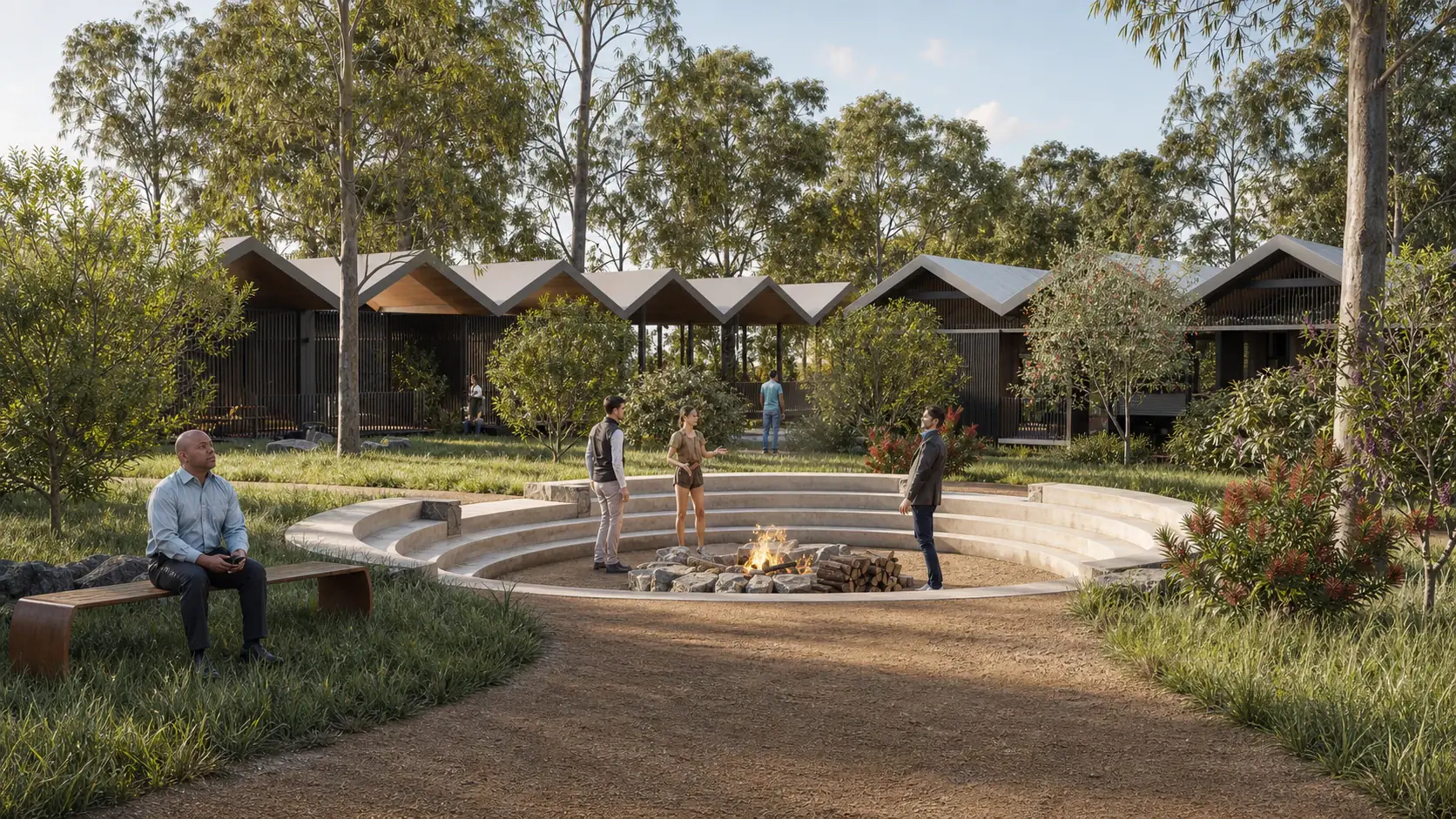
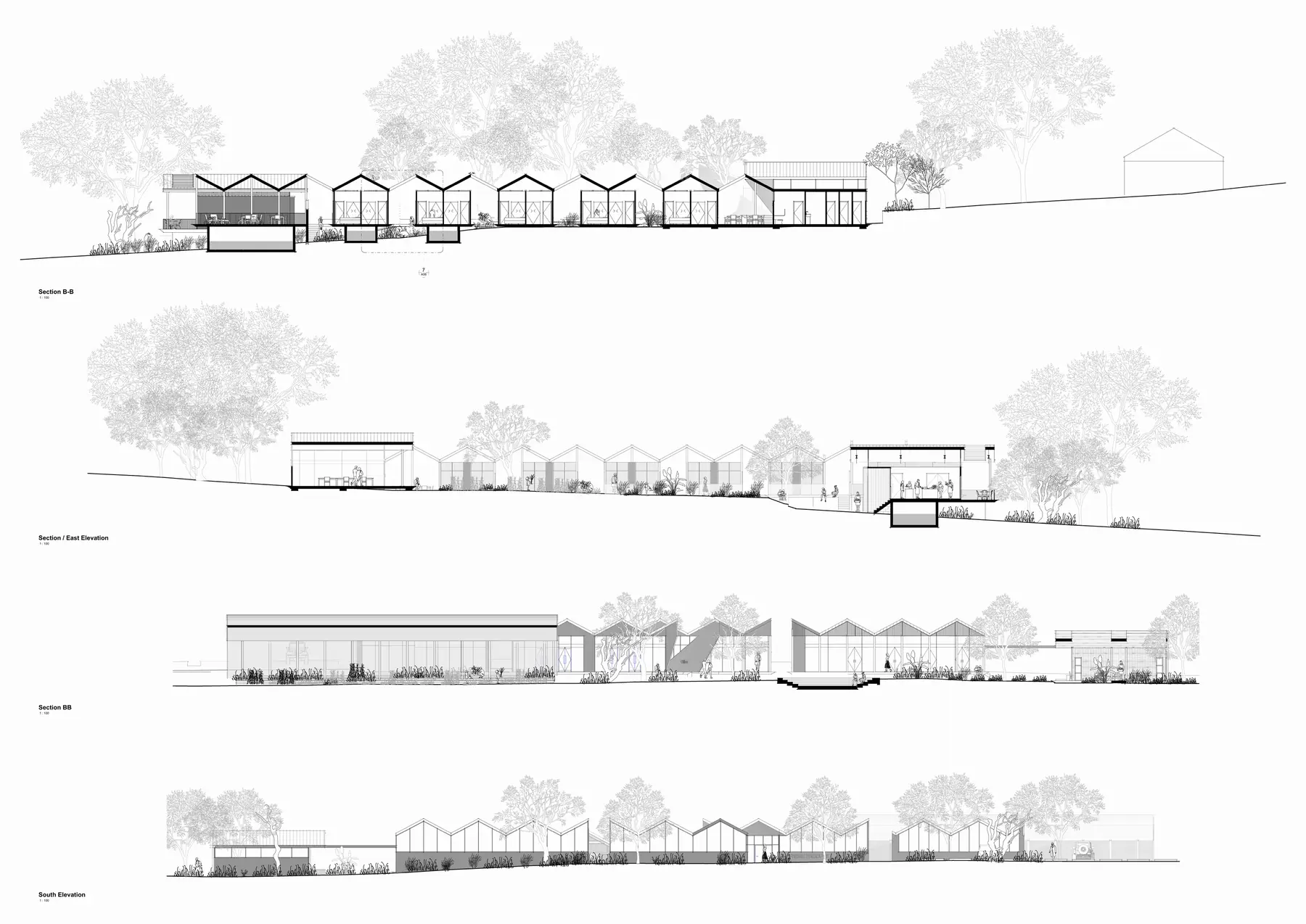
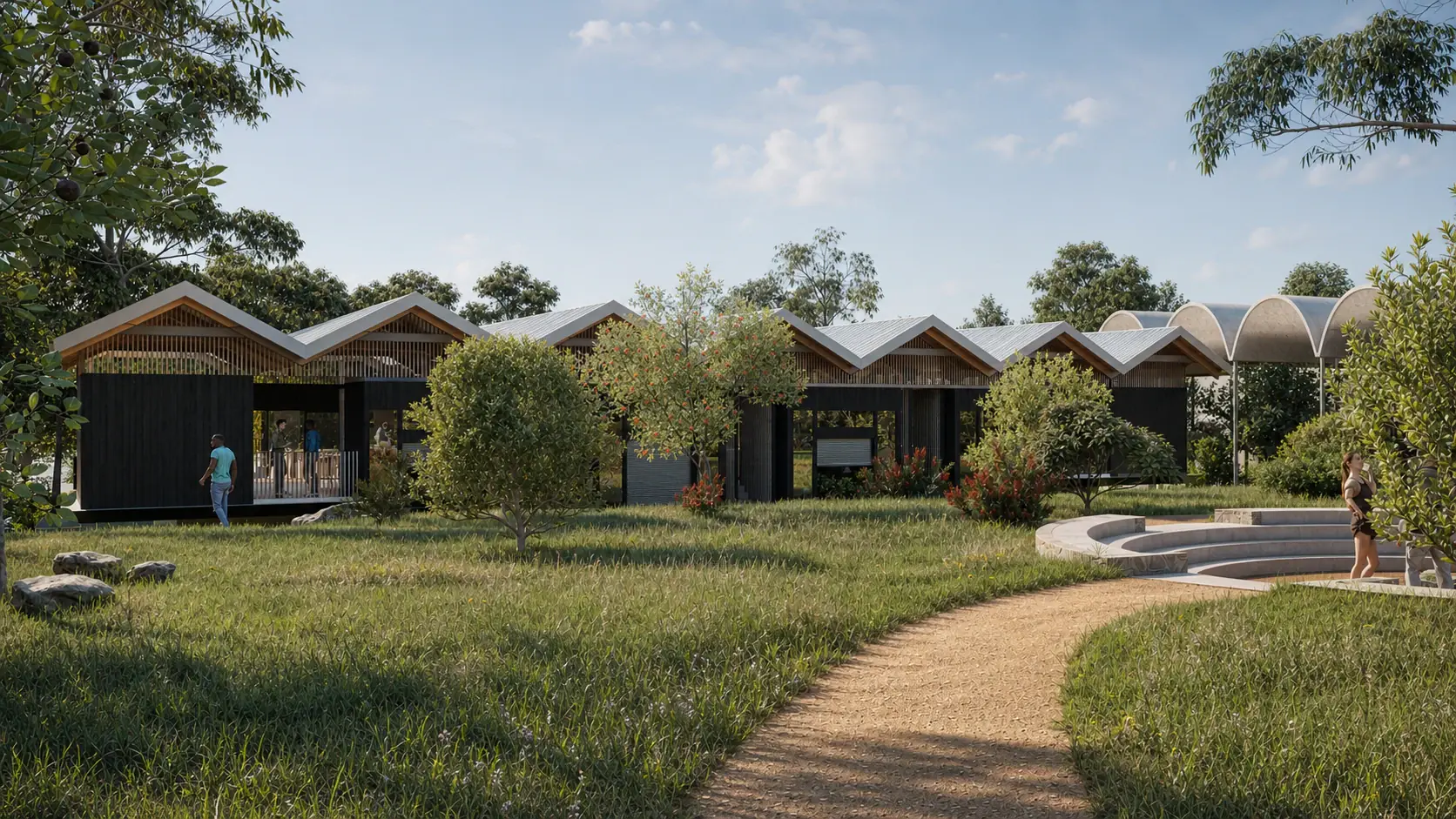
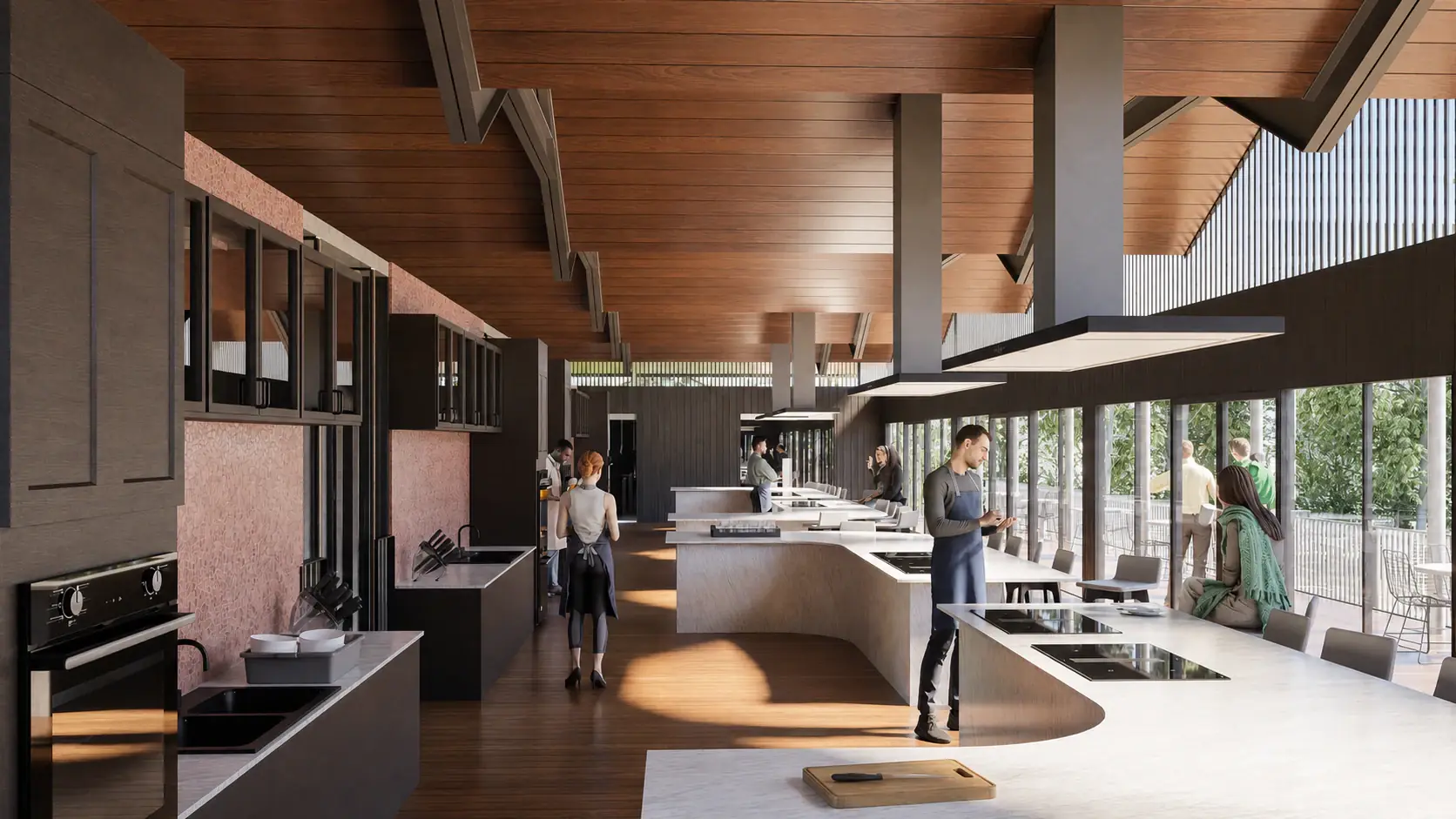
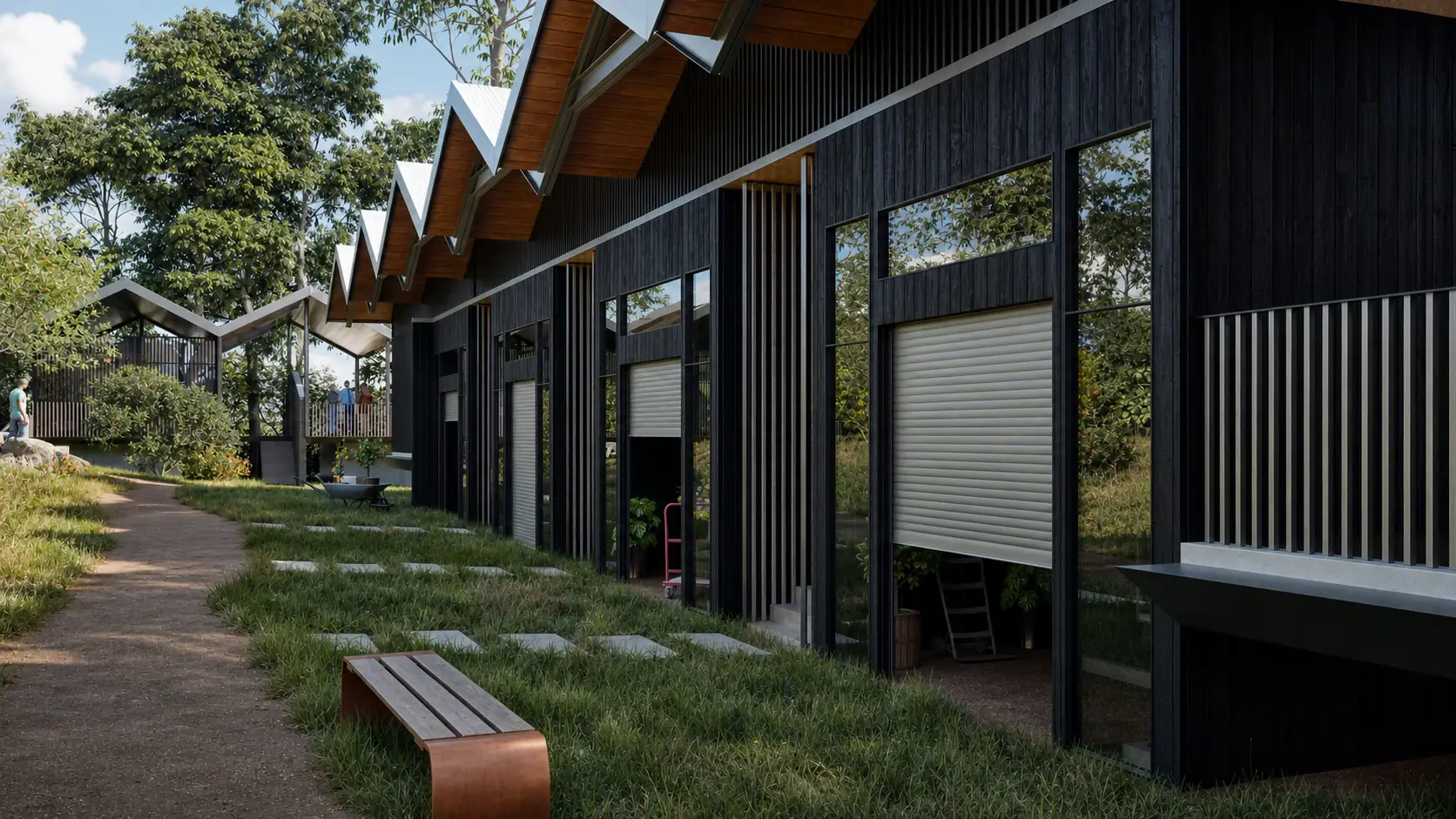
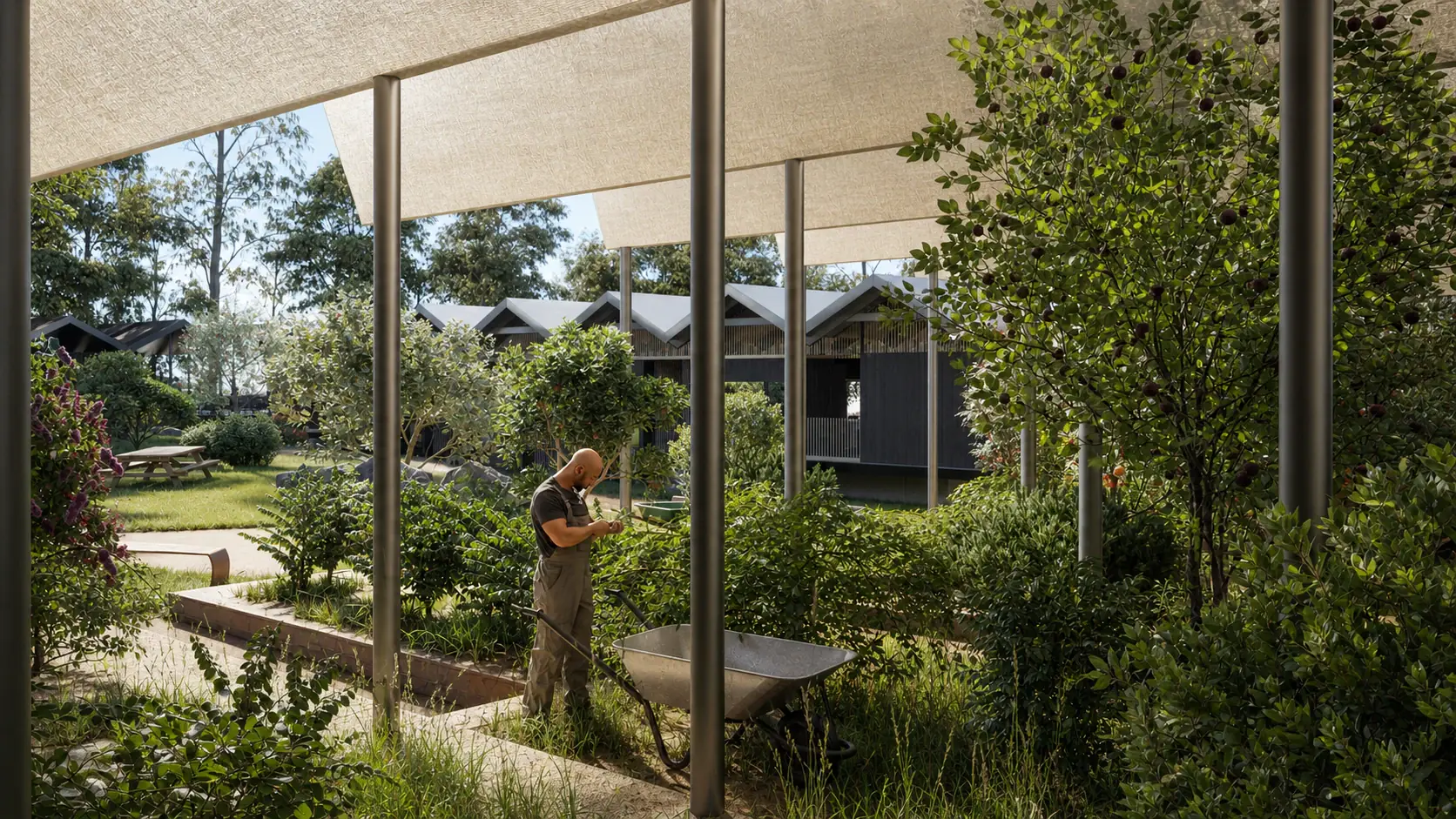
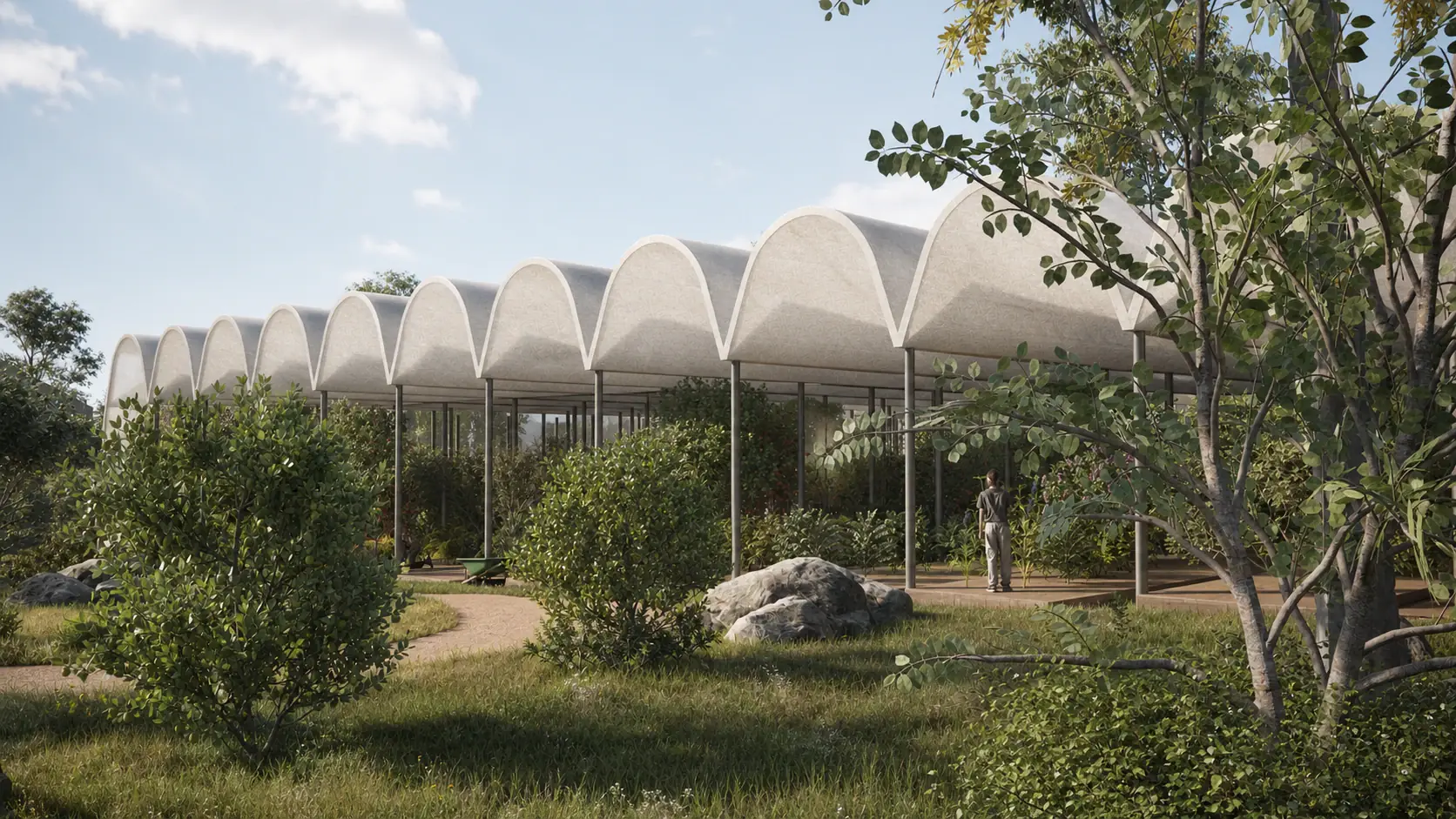
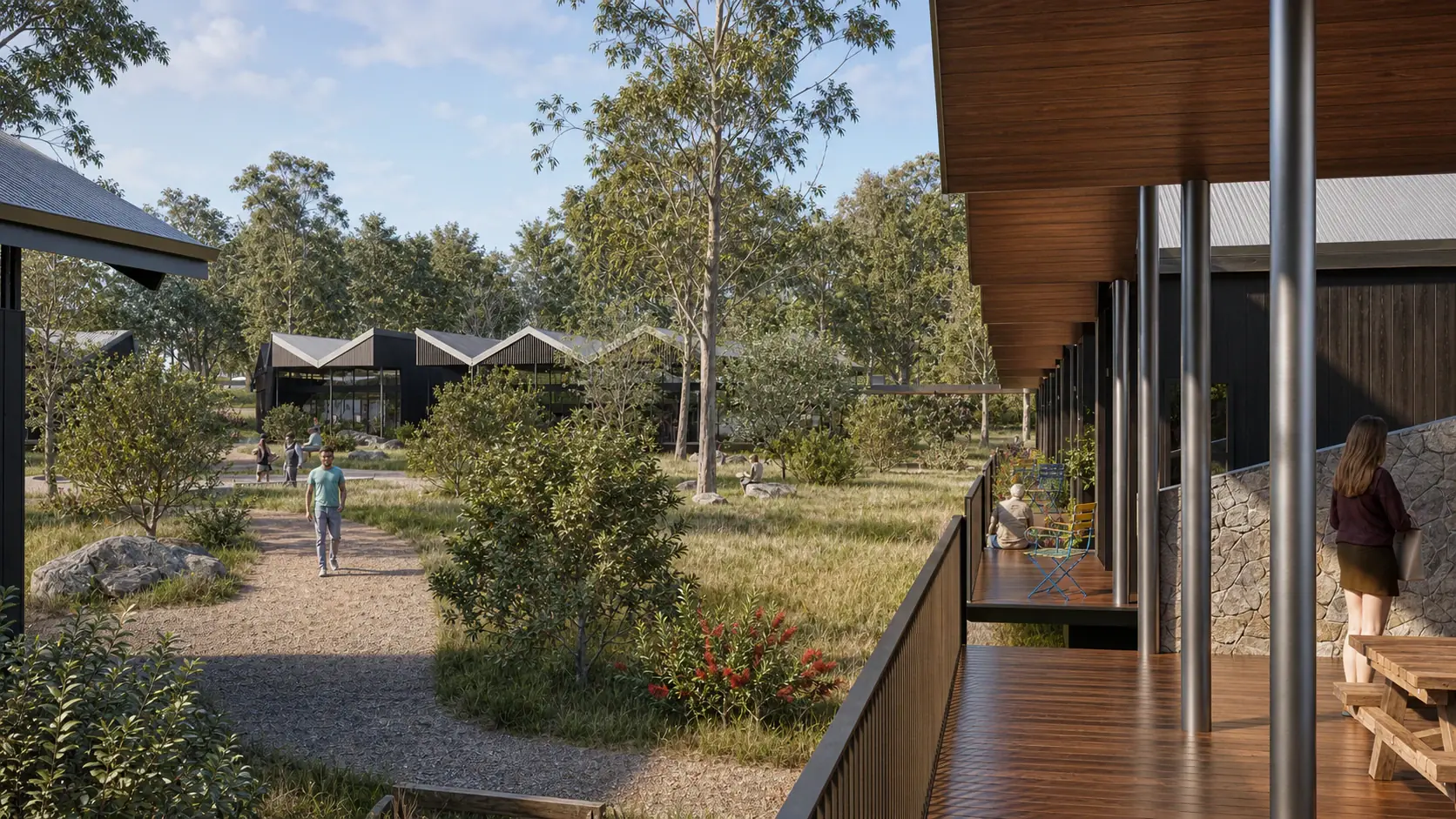
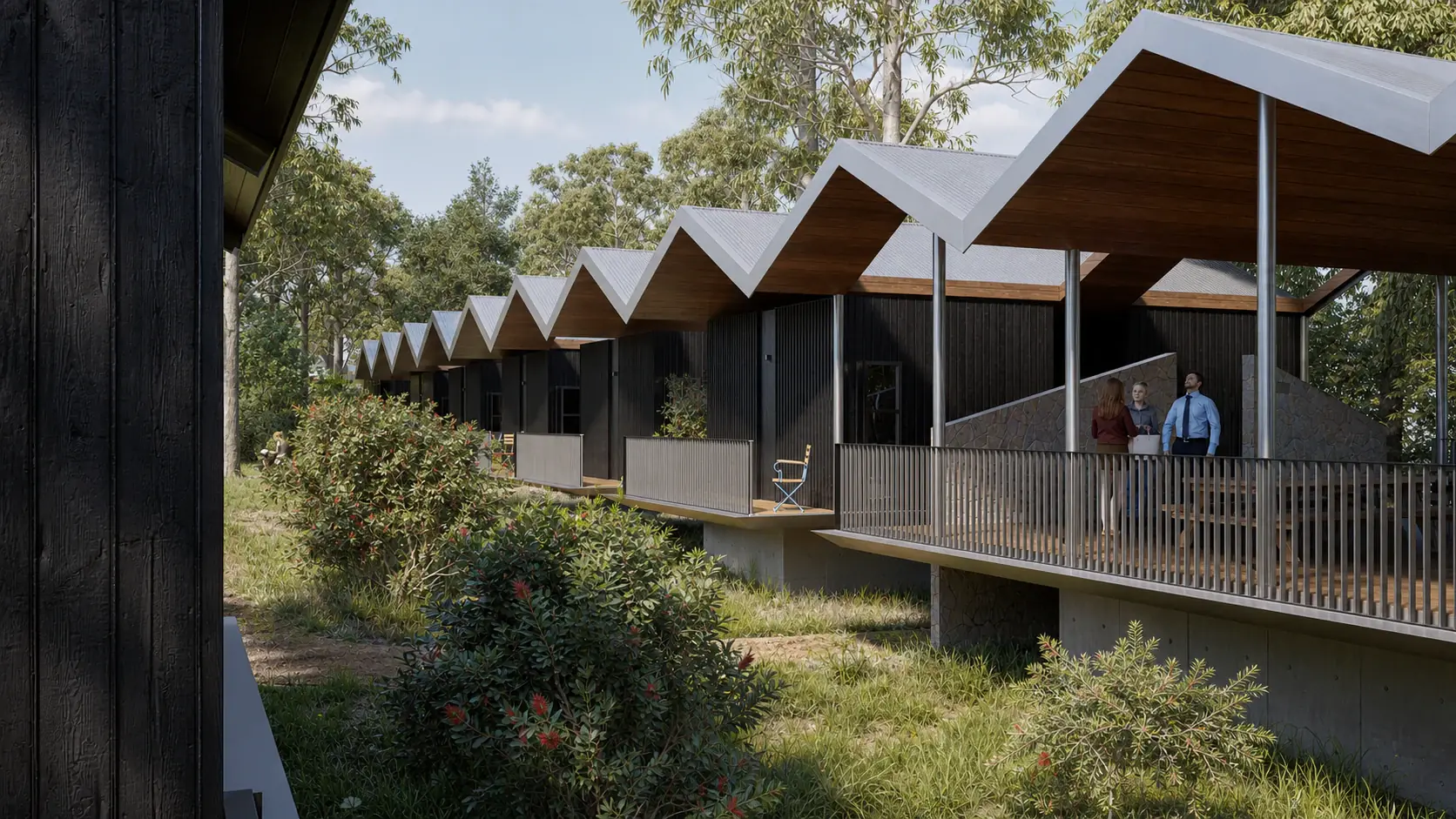
The proposal brings food production, learning, hospitality and short-stay accommodation into one connected landscape. Each part of the precinct is positioned to support gathering, exchange and an active relationship with the surrounding bush setting.
The masterplan is organised around a central yarning circle, with paths extending toward the commercial pavilion, teaching kitchen, greenhouses and living quarters. This shared centre gives the precinct a clear social and spatial heart.
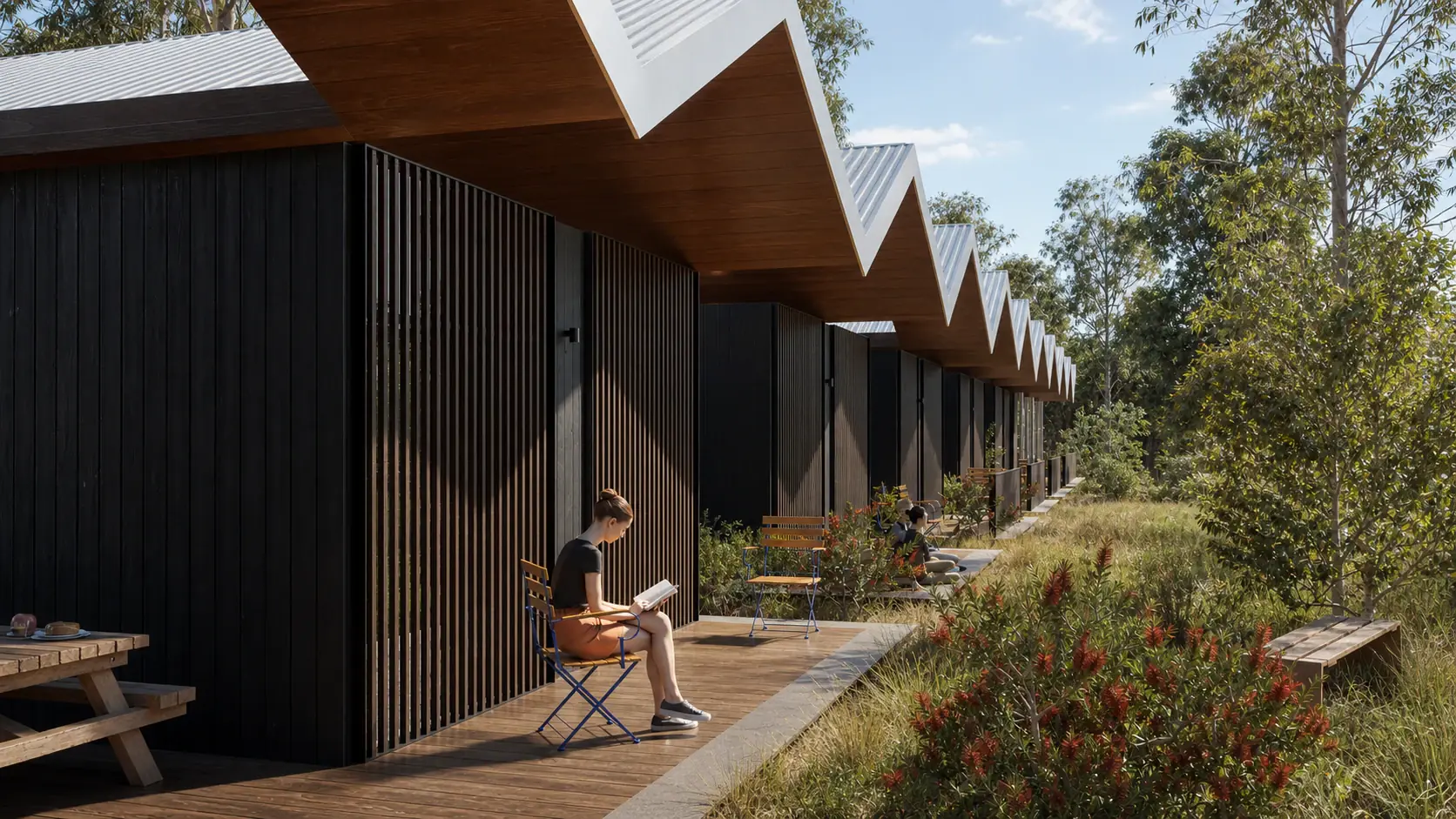
A family of repeated roof forms establishes a consistent identity across buildings of different scales and uses. Dark cladding and warm timber soffits allow the pavilions to sit quietly within the landscape while creating sheltered edges for movement and occupation.
Food is treated as both a practical resource and a way of bringing people together. Growing areas, greenhouse spaces and the teaching kitchen create a visible sequence from cultivation and harvesting through to preparation, sharing and learning.
The living quarters are arranged as smaller pavilions along the landscape edge. Private rooms open onto sheltered decks and shared planting, balancing moments of retreat with a broader sense of connection to the precinct and its daily activity.
Design Response
The project investigates design as a platform for knowledge sharing, cultural connection and community engagement. Spaces were developed to support education, food production, hospitality and shared experiences while strengthening relationships between people, place and Indigenous practices.